Before the First App: One Settlement, Many Breakthroughs
How States Can Work Together to Better Leverage Meta Settlement Money for Upstream Prevention
Tuesday, November 24, 2026 · 1:00–2:00 PM Central (2:00 PM Eastern / 11:00 AM Pacific) · Free · Online
Why This Webinar, Why Now
States are now deciding how to use their share of the Meta settlement, which requires Meta to pay about $17 billion to the states over 10 years (NPR). Most of the conversation so far focuses on teens who are already struggling. Those needs are real. This webinar makes the case for also investing upstream: in the prenatal-to-five years, when the brain builds the capacities that help children grow up with a healthier relationship to technology. Those capacities are early relational health, executive function, and language and early reading. They protect against the harms of social media, and increasingly of AI, which young children are meeting even sooner.
The second message is about how the money is used. Settlement dollars too often get split into small pieces, with every organization competing for its own share. The webinar shows a better pattern: coordinated efforts that bring many organizations together behind one strategy. Minnesota’s Rally to Read and its Baby Brain Builder Coalition are one example in progress, and states can share strategy, research and tools instead of each reinventing them.

This webinar makes the case for that investment, and for doing it together rather than alone. Since states aren’t competing with each other for these Meta Settlement dollars, there's a rare opportunity for states to pool a modest slice of this funding toward shared strategy, shared measurement, and shared infrastructure — rather than each state rebuilding the same groundwork in isolation. That same infrastructure then strengthens work far beyond this one funding stream: reading proficiency, substance use prevention, youth mental health, suicide prevention, and high school graduation efforts can all draw on it too.
researchers, practitioners, and coalition leaders, already putting these ideas into practice, and leave with a concrete way to get involved: joining an emerging cohort of states and coalitions working together — not against each other — to make this decade of funding count.
Relevant for state and coalition leaders working on Meta Settlement allocation, Preschool Development Grant (PDG) applications, and related block grant funding, as well as funders and researchers interested in prenatal-to-five investment.
Presenters:

Katrina Macasaet, Senior Professional Development Manager, ZERO TO THREE. Katrina has more than 10 years of experience in early childhood workforce development, curriculum design, coaching, and professional learning. At ZERO TO THREE, she leads national and international professional development initiatives and oversees trainer certification for the Critical Competencies for Infant-Toddler Educators™ and The Growing Brain: From Birth to 5 Years Old, a curriculum on the science of early brain development.
She previously served as an instructional coach for the Orange County Department of Education and a child development instructor at Saddleback College, and served on the Council for NAEYC Accreditation of Early Learning Programs. She holds a bachelor’s degree in early childhood education and a master’s degree in human development.
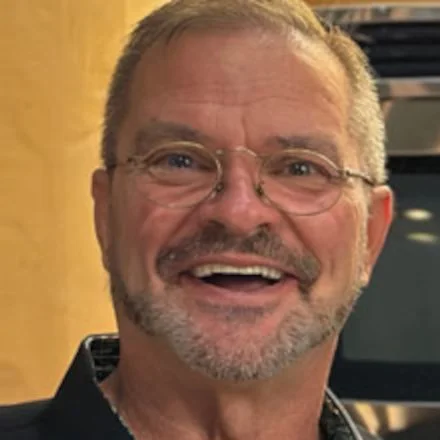
Tim Reardon, Executive Director and Ex Officio Board Member, Minnesota’s Rally to Read. Tim is a seasoned executive, consultant and professor who aspires to accelerate opportunities to break the cycle of generational poverty and racial injustice in Minnesota. He brings a track record of creating authentic mutually respectful community relationships, implementing evidence-based strategies, building multi-sector partnerships and collaborations and inspiring people to give their time, talent and treasure for a worthy cause. He wrote a 2023 editorial in the Minnesota StarTribune, “If Cuba can eradicate illiteracy, Minnesota certainly can,” which led to the Monticello pilot.
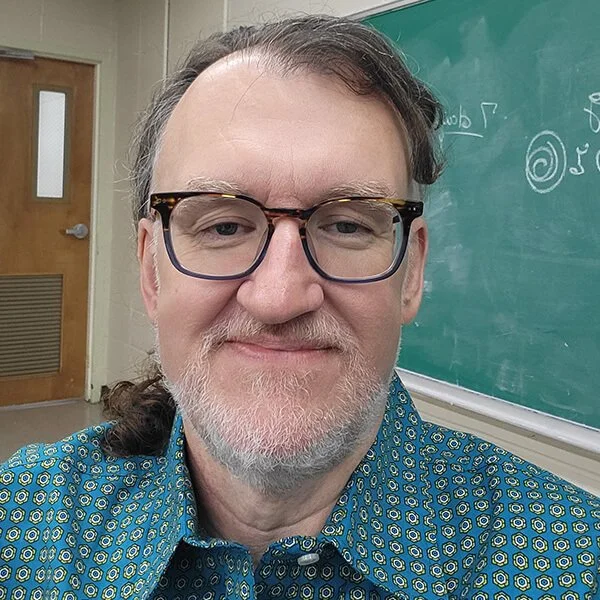
John Till, Chief Strategy Officer at The Family Partnership in Minneapolis, Minnesota, is responsible for Four Directions, a therapeutic preschool for urban indigenous children; developmental therapies that support healthy child development; organizational innovations related to two-generation (2Gen) and brain science-informed strategies; and program evaluation agency-wide. John holds an M.S. in Biological Sciences; his research was on the neuroscience of sensory and cognitive development in children. John currently serves as the Board Chair for the Metropolitan Alliance of Connected Communities in Minneapolis, and is part of the Innovation Subcommittee of Children’s Home Society of America.
Since 2017, John has led efforts to develop and scale EGG Toolkit, a novel whole family approach to boost executive functioning and school readiness with preschool children and their parents, as well as with parents in home visiting programs and parenting groups. In 2019, Harvard Center on the Developing Child – Frontiers of Innovation selected EGG for a planning grant for national replication and scaling, followed by an implementation grant in 2020-2021. EGG has now been piloted in five states, and in the fall of 2021 won Minnesota Council of Nonprofits’ Innovation Prize. John partners closely with Reflection Sciences, Inc., the national leader in executive function assessment and national sales lead for EGG Toolkit.
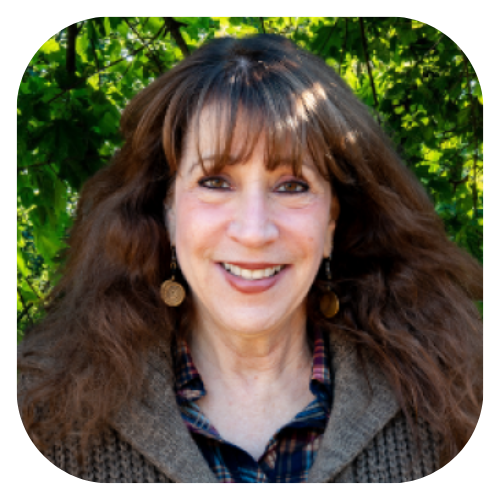
Diana (Denni) Fishbein, PhD, Senior Scientist, Frank Porter Graham Child Development Institute at UNC-Chapel Hill, President & Co-Director of the National Prevention Science Coalition to Improve Lives, Nova Scholar. Her research supports the premise that underlying neurobiological mechanisms interact with the quality of our psychosocial experiences and environmental contexts to alter trajectories either toward or away from risk behaviors.
She has published extensively and serves in an advisory capacity for federal and state government bodies as well as several universities and organizations. Given the inherent translational nature of this research, she founded and directs the National Prevention Science Coalition to Improve Lives (NPSC), a national organization dedicated to the transfer of knowledge from the basic sciences to practices in real-world settings and public health policies.

Sam Arungwa, PhD, Co-Chair, Poverty Reduction Working Group, National Prevention Science Coalition to Improve Lives; Director of Prevention Science, Prevention Science Corp. (Utah). Dr. Arungwa holds a PhD in Juvenile Justice from Prairie View A&M University and a master’s degree in Administration of Justice from Texas Southern University. His work applies prevention science to public policy, including research on the costs and community support for preventing juvenile delinquency through the Communities That Care model.
He developed a no-cost, college-level education model for Utah jails, piloted at San Juan County Jail and expanded to Juab County Jail in partnership with Snow College. In this webinar, he will discuss how communities and universities can mobilize existing expertise, infrastructure, and surplus resources to strengthen evidence-based upstream prevention through coordinated implementation and measurable outcomes.
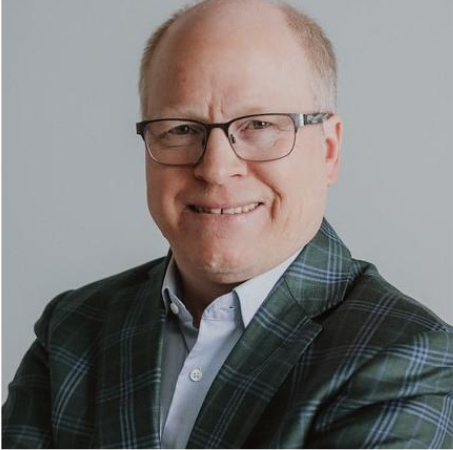
Bill Barberg, a co-founder of the Population Health Learning Collaborative, is the President and Founder of InsightFormation, Inc., a Minnesota-based consulting and technology company that helps communities, regions, and states address complex social and health issues that require multi-stakeholder collaboration. His deep background in strategy implementation has been featured in dozens of conference presentations and webinars. He has been a pioneer in many projects that have pushed forward the practices for achieving Collective Impact and system change.
Bill was selected to write the chapter on “Implementing Population Health Strategies” for the book, “Solving Population Health Problems through Collaboration” (Routledge, 2017). Bill co-authored a paper for the Journal of Change Management on “Leading Social Transformations to Create Public Value and Advance the Common Good”. Bill also co-authored the influential article in Policy Quarterly on “The Future of Public Service and Strategy Management-at-Scale” that shared a breakthrough way to address complex social challenges.
What You’ll Take Away
Why prenatal-to-five strategies are a strong, defensible use of Meta settlement dollars
How executive function can be strengthened and measured in early childhood
How Minnesota’s Rally to Read and the Baby Brain Builder Coalition are organizing a coordinated approach
How one shared framework can help many funding streams (Meta settlement, Preschool Development Grants, block grants and philanthropy) work together
How coordinated research and shared tools can help states and local coalitions move faster without reinventing the wheel
How to mobilize community and university resources
Who Should Attend
State and local leaders, legislators, and attorneys general’s offices deciding how to use Meta settlement funds; coalitions working on Preschool Development Grants and other block grants; United Ways, foundations and other funders; and early childhood, literacy, public health, education, prevention and child-welfare leaders who want these dollars to make a lasting difference.
What Comes Next
Minnesota Coordination Meeting · Tuesday, December 8, 2026, 1:00 PM Central. For Minnesotans who want to join a coordinated effort with Minnesota’s Rally to Read and the Baby Brain Builder Coalition.